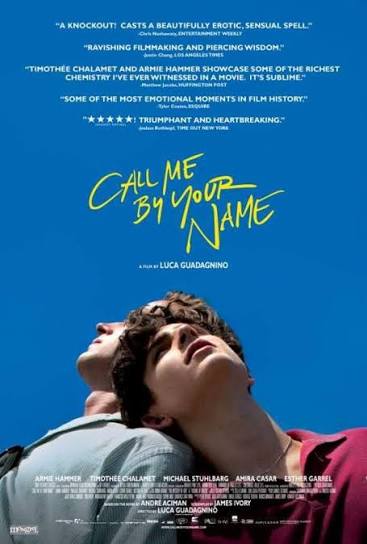
Call Me by Your Name · the moments
“A fairly straightforward coming-of-age story that’s at its finest in moments.”Sam C. Mac, Slant Magazine
This article takes two great screenplays — Call Me by Your Name and Marriage Story — and reads each one four times over: as single scenes, as runs of scenes, as acts, and as one finished script. Each time it asks the same question: how strong is the writing at this level? The two films answer it in opposite ways: one is strongest as a set of scenes, the other only as a complete screenplay.
Critics keep reaching for the same two phrases. One film is “a film of moments”: you remember it scene by scene. Another is “more than the sum of its parts”: the finished screenplay lands harder than any one scene in it. Two critics, writing years apart, describe these two films in language that resembles that split.
“A fairly straightforward coming-of-age story that’s at its finest in moments.”Sam C. Mac, Slant Magazine
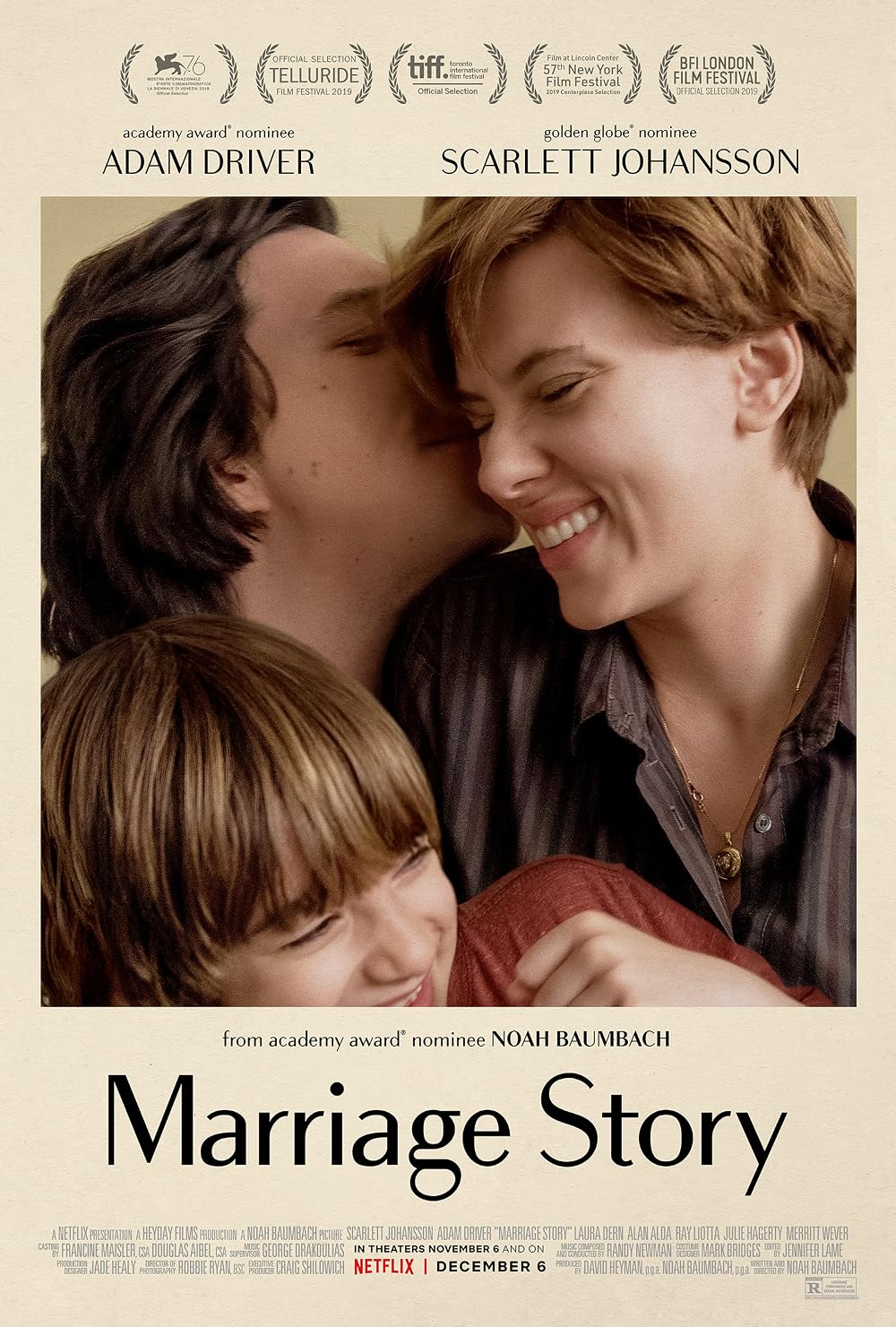
“The gradual transition … is so astutely done you barely notice it happening.”Andrew Pulver, The Guardian
Run both scripts through Layered Read — ScriptReader.ai’s screenplay-analysis system, explained below the chart — and the two profiles cross. Each point is a script’s standing at one scale — scene, sequence, act, or whole — against a library of produced features; higher is a stronger reading. Call Me by Your Name ranks higher in the scene, sequence, and act comparisons; Marriage Story ranks higher in the whole-screenplay comparison — and by a wide margin. Both scripts are strong; the difference is where.
Layered Read is an AI screenplay-analysis system from ScriptReader.ai. It scores twelve qualities of craft at four scales — scene, sequence, act, and the whole — so a screenplay can be read as scenes, as sequences, as acts, and as one finished whole.
A scene can be clear but inert. It can move fast but feel unearned. It can grip on its own yet fail to build the sequence around it. Those are three different problems — which is why Layered Read scores twelve separate things a unit can do well or badly, grouped into three lenses, rather than one overall grade.
Every unit is scored at its own scale — a scene judged as a scene, the whole screenplay judged as a whole — and a screenplay’s reading at one scale is only ever compared against other produced screenplays at that same scale. Acts are never measured against scenes: that is what turns “where is this screenplay strongest” into a question with an answer rather than a matter of taste, and why a script can rank high at one scale and mid at another without contradiction.
The close readings later in this article follow one of the twelve — Assembly, whether the parts work together. Layered Read judges it separately at each scale, and a sequence’s score is not calculated from its scene scores; that independence is what lets a larger unit read more strongly than its parts do on average. The reversal above also appears in Assembly on its own, so it is not an artifact of averaging twelve qualities together.
Underneath, it is one question asked four times — do the parts add up to something? — and only the parts change.
| Scale | Assembly asks |
|---|---|
| Scene | Do the beats form one dramatic event? |
| Sequence | Do the scenes build one movement? |
| Act | Do the sequences build one stage? |
| Whole | Do the major parts form one design? |
Two kinds of number follow. Percentiles compare a screenplay with the other screenplays — “88th for the whole screenplay” — and rank the overall reading across all twelve qualities. Raw scores (out of ten) are Layered Read’s direct reading of a single unit, following the one quality that asks whether its parts fit together. In the close readings below, we place a larger unit’s independent score beside the average of its smaller parts — “the whole scores 9; its four acts average 7.25.” That side-by-side is not a separate Layered Read metric; it is a way to see what appears when the material is read at the larger scale.
The screenplay opens with Charlie and Nicole listing what they love about each other. On their own, those twelve short scenes score about 4.75. As one sequence, the run scores 7. The higher reading tells us the run works more strongly as a unit; the close reading suggests why — its order builds a picture of the marriage, so that the later reveal, that the lists were written for a mediator and that Nicole will not read hers aloud, reframes everything before it.
The pattern repeats as the units grow. The final act scores 8 while its sequences average 6.4; the complete screenplay scores 9 while its four acts average 7.25. Near the end, the couple’s son struggles through Nicole’s list and Charlie finishes it — a private inventory of love turned into the record of a marriage that no longer exists. The measurement locates the strength at the whole; one reason is visible when the opening lists return at the end — earlier parts gain new meaning in the completed design.
Watch the film and you remember pieces: a hand left too long on a shoulder, the peach, a father’s late-night kindness. In the screenplay, those scenes score around 6 on their own, and several of its strongest sequences score 8. Take the morning after Elio and Oliver’s first night together: waking tangled at dawn, a wary distance at the river, a reconciliation in the town square, and Elio alone in the attic. Its four scenes average about a 6; read as one sequence, the run receives an independent score of 8. The added strength appears at the sequence: four separate encounters become one movement of closeness, distance, reconciliation, and aftermath.
The completed screenplay still scores a respectable 7 — the point is not that the whole fails to cohere. It is where the strength sits. Against other produced screenplays, its sequences land in the 79th percentile — near the top of the comparison set — while the whole screenplay eases back to the 47th, nearer the middle. The strength peaks at the sequence and fades toward the whole. That is the exact mirror of Marriage Story, which runs the other way, from the 35th percentile at the scene to the 88th at the whole.
One more thing, plainly: the two critics quoted at the top were not measuring anything. They just happened to describe the films the way the numbers do. That is not proof the tool is right, but it is a good sign.
Writers are taught to sharpen individual scenes and to repair the overall structure; the levels in between get less attention. Do strong scenes build one sequence, or does the pressure reset between them? Does a callback create new meaning, or just repeat an earlier beat? Do the acts form one design, or stay separate strong sections? Layered Read turns those questions into something a writer can inspect.
The gallery shows where twenty other screenplays are strongest — scene, sequence, act, or whole. Pick one, look at its shape, then read a critic or viewer describing the same thing in their own words.
These are a handful of examples, chosen because their shapes are clear — not a random sample, and not a ranking. Each line compares like scales against like; higher is a stronger reading at that scale, not a better film. The quotes are witnesses to an experience, not proof of the measurement. The vault keeps growing; the next tab shows every feature’s shape, and each title opens to its complete read in the tool.
Rarely. Of the twenty-two screenplays in the gallery above, four hold up at every scale at once: Psycho, The Silence of the Lambs, The Matrix, and Memento — strong scenes inside strong sequences inside strong acts inside a strong whole. It is probably not a coincidence that all four are films people reach for when they want to talk about construction.
That is the hard version. Most screenplays — including both of the ones in this article — put their craft somewhere in particular, and the writer who can turn four encounters into a single movement is not automatically the writer whose ending reframes their opening. Being strong at one scale is already an achievement; being strong at all four is the rarest result in the set. Neither of these films is trying to be the other, and knowing which one you are writing is more useful than wishing you were writing the other.
The scores compare screenplays only at the same scale. They are not overall film rankings, and one profile is not inherently better than another. These two scripts were chosen because their contrast is clear. Layered Read is newly released and still being validated; the open questions are listed in the method note below.
The tool shows you where the pattern is, and it suggests ways to strengthen a scene or sequence. What it does not do is tell you why the pattern is there, or what it means. That is still the critic’s and the writer’s job.
And it measures craft, not worth. Layered Read does not determine a screenplay’s total originality, artistic value, or cultural importance, its commercial prospects, or what acting, direction, editing, and music add to the finished film. A low reading flags a craft risk to look at; it does not prescribe a fix.
Each reading follows the same three steps: average a screenplay’s craft scores across every unit at that scale into one number, rank that number against every produced feature with a complete reading at the same scale, and report the result as a percentile — roughly 200 films in the comparison set, fewer at the act scale (about 155). (Internally we call these four scales “grains.”) Each scale is read independently: the whole screenplay is scored as a whole, not computed from its scenes, which is why a larger unit can rank higher than the parts inside it. The single-quality figures in this piece are Assembly, one of the twelve. For this article the script texts, the segmentation into units, the model version, the rubric, the comparison set, and the generated readings are all frozen. What remains open — and what we are still testing — is repeatability across reruns, agreement with expert readers, and sensitivity to how a script is cut into units and which films are in the set. The crossover reported here held under equal-weight-by-axis, equal-weight-by-lens, and the removal of each lens in turn.
Everything above followed one quality. The full reading scores all twelve, at every scale. Here are both scripts — every scene, sequence, and act — opening on Triage, the overall reading across all twelve.
The live Layered Read for each script — every act, sequence, and scene, coloured by Triage. Use “Colour by” to switch to a single quality — Assembly, the one this article followed, is a good place to start — and click any unit to open its full reading.
Every feature in the vault, read at four scales and ranked against the vault. The four dots are its percentile at the scene, sequence, act, and whole — so you can see, at a glance, where each screenplay’s craft is strongest. They are grouped by that shape, and every card opens to its complete Layered Read. (A composite of all twelve qualities; four independent rankings, not a trend over time.)